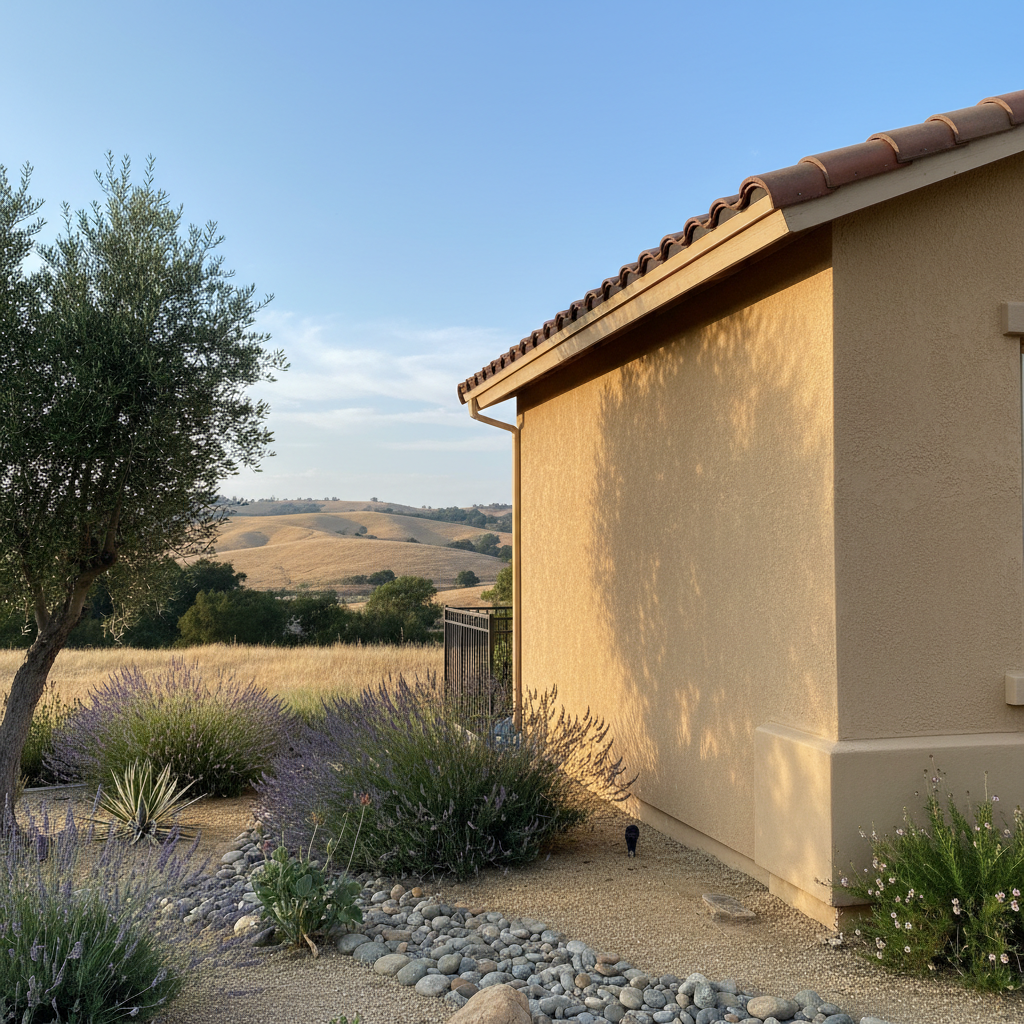
Stucco is one of the toughest sidings you can put on a house, period. Especially here in Davis, it really holds up. It handles our hot, dry summers and those wet, foggy winters pretty well, which is great. But "tough" doesn't mean "no maintenance." Like anything else, a little regular care makes a huge difference, ensuring your stucco lasts as long as it should, protecting your home and keeping it looking sharp.
Making Your Stucco Last Longer
You want your stucco to last for decades, right? Good news: it's built for that. The biggest thing you can do to extend its life is simple: manage water. Stucco and water are fine together on the surface, but you absolutely don't want water getting behind it. That's where the real trouble starts.
- Check your gutters and downspouts. Make sure they're clean and actually directing water well away from your foundation. If water keeps splashing against the stucco at the base of your house, especially after those heavy winter rains, you'll see issues pop up over time.
- Trim back landscaping. Bushes and trees that are right up against the stucco can trap moisture, stop it from drying out properly, and even scratch the surface. Give your stucco a little breathing room, okay?
- Look at your irrigation. Sprinklers hitting the side of your house every day? That's a definite no-go. Adjust them so they're watering your plants, not your walls.
- Seal around openings. Windows, doors, and utility penetrations are common spots for water to sneak in. Check that the caulking around these areas is in good shape. If it's cracked or pulling away, that's basically an open invitation for water.
What Regular Maintenance Actually Looks Like
Honestly, stucco maintenance isn't rocket science. Most of it is just good old-fashioned home upkeep, the kind your grandparents probably did.
First, give your stucco a good wash once a year. Usually, a garden hose and a soft brush are all you need. For tougher grime, you can mix up a mild detergent solution. Just make sure to rinse everything thoroughly afterward. Don't go crazy with a high-pressure washer, though; you could damage the finish or even force water into places it shouldn't be. A gentle spray is plenty.
Second, do a visual inspection a couple of times a year. Walk around your house, really look at the walls. Check those areas I mentioned above – around windows, doors, where the stucco meets the foundation, and under the eaves. Our dry climate means you might not see mold and mildew as much as folks on the coast, but dust and dirt can still build up and hold moisture if you don't clean it.
Warning Signs You Should Watch For
Knowing what to look for can save you a lot of headache and money down the road. Here are some red flags:
- Cracks: Hairline cracks are pretty normal with stucco; houses settle, materials expand and contract, you know the drill. But wider cracks (say, thicker than a credit card), cracks that look like a spiderweb, or cracks that run horizontally or vertically for long distances? Those are worth investigating.
- Discoloration or Stains: Dark streaks, especially under windows or near the roofline, often mean water is consistently running down the wall in the same spot. Green or black spots could be mold or algae, which points to persistent moisture.
- Bulges or Soft Spots: If you see areas where the stucco looks like it's bubbling, bulging out, or if it feels soft or spongy when you gently press on it, that's a serious sign of water damage behind the stucco. This is a big one, perhaps the biggest.
- Efflorescence: This is that white, powdery stuff you sometimes see on masonry. It's mineral salts left behind when water evaporates from within the wall. Basically, it means water is getting in and then drying out, leaving those salts behind.
- Missing or Damaged Caulk: As I said before, if the caulk around openings is failing, it's just not doing its job.
When to Call a Professional
You can handle most of the cleaning and visual inspections yourself. But when you spot those warning signs, especially cracks, bulges, or persistent staining, that's when you call in someone who knows what they're doing. Don't wait. A small crack can become a huge problem if water gets in and freezes, or just sits there rotting the sheathing underneath.
As Skyline Stucco Davis, we've seen it all. From homes in Old North Davis with their classic stucco finishes to newer builds out by Mace Ranch, the principles are the same. If you're unsure about a crack, a stain, or just want an expert eye to give your stucco a once-over, give us a call. We'd rather help you catch a small issue early than deal with a major repair down the line. Protecting your home's exterior is a smart investment, and a little proactive care goes a long way.